
Scripture:
1 Peter 2:4–5
4 Come to him, a living stone, though rejected by mortals yet chosen and precious in God’s sight, and 5 like living stones let yourselves be built into a spiritual house, to be a holy priesthood, to offer spiritual sacrifices acceptable to God through Jesus Christ.
Observation:
The call is for us to come to Him, the living stone. Jesus was rejected by mortals, and yet He was chosen and precious in God’s sight. A few verses later, Peter will describe Him as the cornerstone upon which God’s people are being built.
But Jesus is not the only living stone in this passage. Peter says that we, too, are to be “living stones.” He has made this kind of life possible for us through His life and the indwelling presence of the Holy Spirit. Together, we are being used for His construction purposes—built into a spiritual house.
That’s important. A stone by itself isn’t a house.
We are called to be God’s holy people, a holy priesthood. Every day we live our lives, and through our motivations and actions we offer spiritual sacrifices to God. This isn’t simply an individual calling to holiness. God is building a people, living stones knit together in holy living, whose lives are offered to Him through Jesus Christ.
Application:
There is beauty in this imagery—that we are to be a people knit together into a community that becomes a spiritual house. I wonder what it would be like if every church really understood itself this way. Would it change our priorities and activities?
John Wesley discovered something of the importance of this kind of spiritual community through his encounters with the Moravians. Their communal life included intentional groups for prayer, accountability, spiritual growth, and shared life. Wesley was deeply influenced by some of these practices, and bands and classes would become important in the developing Methodist movement. These weren’t simply places where people learned about the Christian life. They were places where people learned to live it together. Living stones were being fitted together into a spiritual house.
I’ve been reading recently about a holiness congregation in Parkhead, Scotland, and their story has captured my imagination. Many years ago, when their church was taken from them, the congregation didn’t fall apart. They were convinced that holiness needed to be preached, and they stayed together. They continued meeting, worshiping, preaching, and serving.
The church survived because the church was never simply the building.
They had become living stones.
What’s remarkable to me is that I’ve actually stood in their spiritual house.
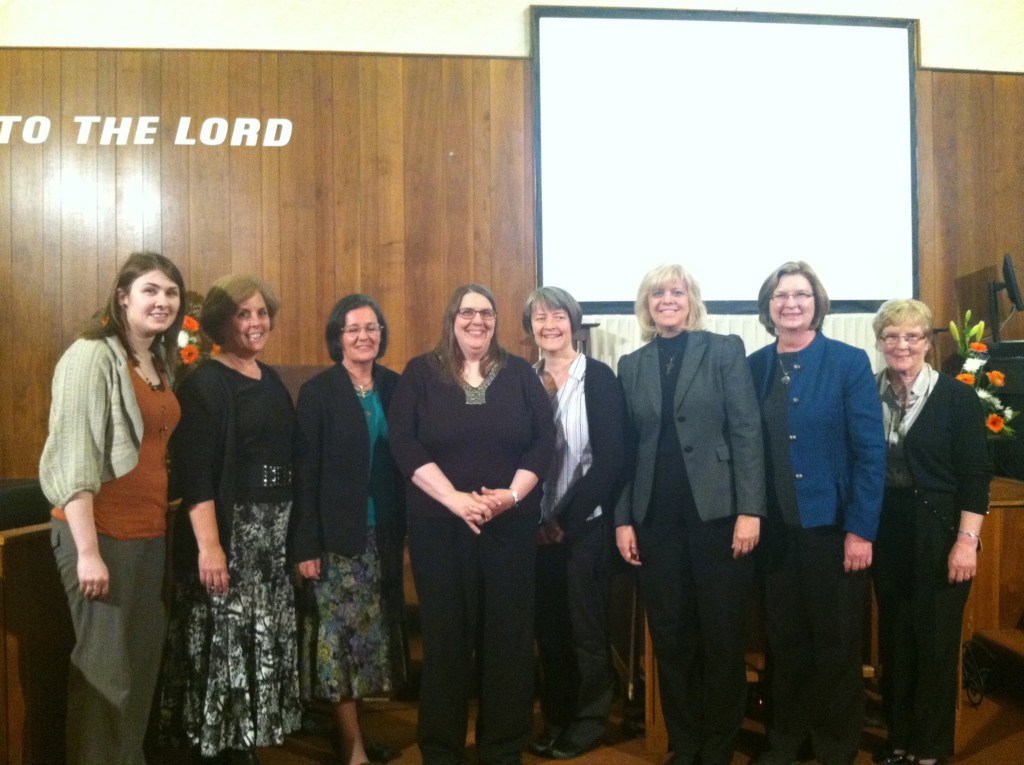
In 2012, I had the privilege of participating in the centenary celebration of the ordination of Olive Winchester, who had been ordained in that congregation in 1912. I worshiped and preached at Sharpe Memorial Church of the Nazarene in Parkhead. I have a photograph from that weekend of a group of us women standing together in the old sanctuary. Across the wall behind us were the words:
“HOLINESS UNTO THE LORD.”
I’ve been reading the history of that congregation again this week, and suddenly that old photograph means much more to me.
Those words weren’t simply painted on the wall of a building. They represented something that had helped knit a people together. Long before I ever stood in that sanctuary, generations of believers had prayed, worshiped, served, sacrificed, and proclaimed a message of holiness there.
The building itself was a vessel. But the people were the living stones.
The idea of meeting for accountability may be pretty uncomfortable for most of us today. It’s actually easier to have someone teach a Bible study than to be accountable with and to one another. Praying out loud with other people may be difficult. Allowing others to ask questions about our spiritual lives may make us uncomfortable. And yet there is something important about being knit together in holy living.
Together there is synergy. We encourage one another to press on toward knowing Christ and holy living. The Holy Spirit works among us, forming not simply holy individuals but a holy people whose shared life reflects the character of our holy God to the world.
Those who have gone before us developed practices that helped them live this way. Each generation has to embrace the call anew. The practices may not always look the same, and they probably shouldn’t. But the presence of the Holy Spirit remains, continuing to form living stones into a spiritual house.
Perhaps that’s the question we need to ask. Not simply, “What practices from the past should we preserve?” but, “What practices are helping to knit us together in holy living today?”
Where is your holy community?
What does your spiritual house look like?
Prayer:
Lord, thank You for those whom You have placed in my life to be part of a spiritual community. Help me not to try to live the Christian life alone. Give me the humility to be open to introspection and to questions that may challenge me. By Your Spirit, knit us together into a holy people whose shared life reflects Your character to the world. May our lives be acceptable to You, our Lord. Amen.


Leave a comment