
Scripture:
Exodus 13:3–10
3 Moses said to the people, “Remember this day on which you came out of Egypt, out of the house of slavery, because the Lord brought you out from there by strength of hand; no leavened bread shall be eaten. 4 Today, in the month of Abib, you are going out. 5 When the Lord brings you into the land of the Canaanites, the Hittites, the Amorites, the Hivites, and the Jebusites, which he swore to your ancestors to give you, a land flowing with milk and honey, you shall keep this observance in this month. 6 Seven days you shall eat unleavened bread, and on the seventh day there shall be a festival to the Lord. 7 Unleavened bread shall be eaten for seven days; no leavened bread shall be seen in your possession, and no leaven shall be seen among you in all your territory. 8 You shall tell your child on that day, ‘It is because of what the Lord did for me when I came out of Egypt.’ 9 It shall serve for you as a sign on your hand and as a reminder on your forehead, so that the teaching of the Lord may be on your lips, for with a strong hand the Lord brought you out of Egypt. 10 You shall keep this ordinance at its proper time from year to year. (NRSVUE)
Observation:
It was vitally important for the Israelites to remember what God had done for them. They had just been delivered from Egypt, and already Moses was telling them how they were to remember their deliverance when the Lord eventually brought them into the land flowing with milk and honey. God had provided a miraculous escape from slavery, and they were never to forget.
There were practical ways in which the people were to remember what God had done. Traditions were established and were to be followed. For seven days they were to eat no leavened bread, and at the end of that time there was to be a festival, a great celebration. And then, possibly most importantly, they were to tell their children the story: “It is because of what the Lord did for me when I came out of Egypt.”
This observance was to become “a sign on your hand and as a reminder on your forehead, so that the teaching of the Lord may be on your lips.” Their remembering involved their whole lives. Their hands participated in the practice. Their minds remembered. Their lips told the story. The faithfulness of God was not simply something they were supposed to know; it was something they regularly embodied.
To make sure that happened, they were to set aside a special time to remember every year.
Application:
Life becomes busy, and it’s easy for traditions to begin to fade into distant memories. But there is something extremely important being taught to the Israelites. It is by embodying the memory that it becomes something that can be passed along from generation to generation.
It is practices that help to carry the faith.
For the Israelites, the eating of unleavened bread became a sign for them. Whenever they saw the bread and then took a bite, they were reminded that when they escaped Egypt, there had been no time to prepare leavened bread. The bread itself became a physical reminder of the faithfulness of God.
Within the Christian tradition, there have long been practices that have helped to pass along the faith from generation to generation. However, I think we are in a season where we could easily lose some of those traditions and, with them, the vessels that have carried our faith. Life has become busy, and our electronic devices constantly demand our attention. What has happened to our traditions?
When I was a child, we had Sunday morning Sunday School, morning worship, youth group, evening worship, and Wednesday night prayer meeting. I’m not saying that we have to do all the same things we did when I was a child, but look at these activities as vessels that carried the faith. Sunday School was a structured program that, over a period of years, covered a curriculum that was basically a catechism. By the time I finished sixth grade, I had studied much of the Bible.
Sunday morning worship was a time when I learned to sit and try to listen to a sermon, and honestly, I didn’t always do it well. But it was part of life and the rhythm of life, and there are still flashes of sermons from my youth that I remember. I probably heard more than I can recall.
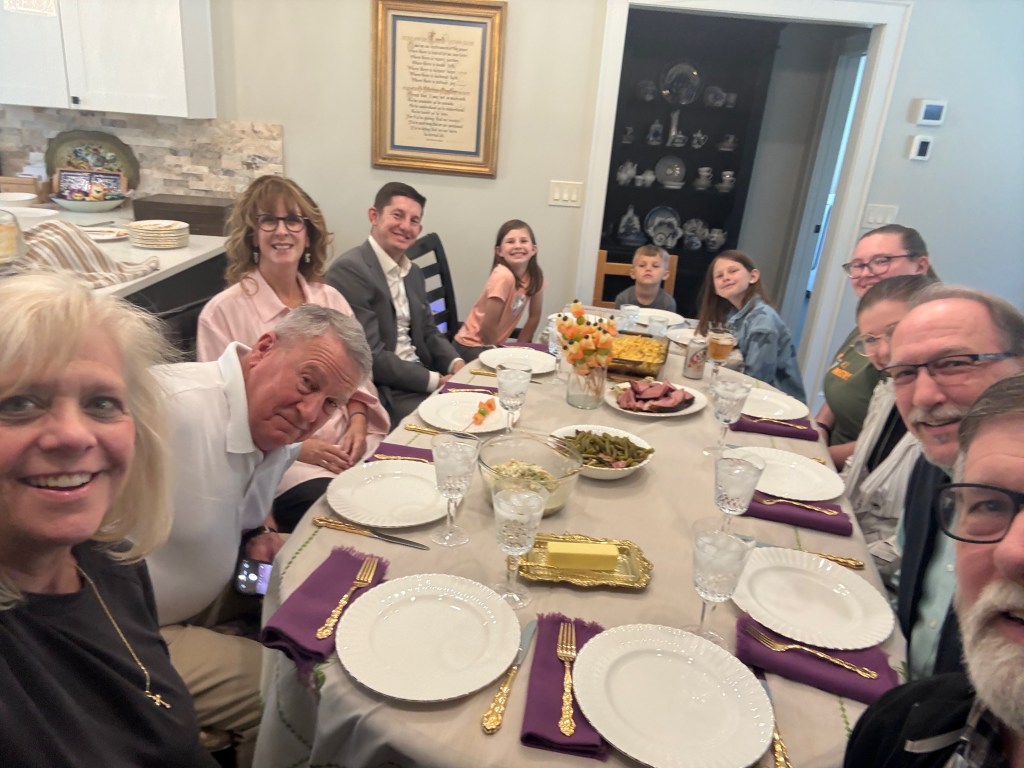
I didn’t include Sunday dinner in the list above, but it was also a practice. The whole family came home to eat dinner together around the table after morning worship. My mother always made extra food so that we could invite others to join us for the meal. It was an incredible time of fellowship around the table, and the conversations were always rich. When there were guest preachers, they came home for dinner. As children, we got to meet some of the most amazing people and hear about them and their lives.
Youth group was an opportunity to learn how to serve in the church. Sunday night worship gave space for younger preachers to practice their skills or for a missionary to come and speak. It was a special time, often filled with lively music and focused on evangelism. It was a great opportunity to invite a friend who might not normally come to church.
Wednesday night was really the engine of the church. The prayer meeting was where people gathered to — pray! And if you were a young person who could listen in, it was a place to be mentored in the art of prayer and testimony. These were testimonies like those that John Wesley would have required — sharing what God was actively doing in the lives of these people.
So there was a pattern of Sunday morning discipleship, Sunday evening mentoring and evangelism, and Wednesday evening prayer and testimony. For decades, these were practices that helped to carry the faith.
While good doctrine is foundational, practices help to carry that doctrine into our lives and help us to remember.
So, what happens when the practices begin to disappear? We don’t have to go back to the way it was, but I think we need to seriously consider how practices become incorporated into our lives, or we may fail to pass the faith on to the next generation. We need the faith in our hands, in our minds, and on our lips. We need practices that help us remember what God has done so that we can tell the story to the next generation.
Lord, help us to remember!
Prayer:
Lord, thank You for challenging me and helping me to think about the places where we may not be remembering as well as we should. Help me to be faithful in shaping traditions for my own family as vessels that carry the faith. May we remember what You have done and faithfully pass that story on to the generations who come after us. Amen.
 Reflecting the Image
Leave a comment